
Driving in Cambodia
We did not drive in Cambodia, not even a motorbike. No thank you.
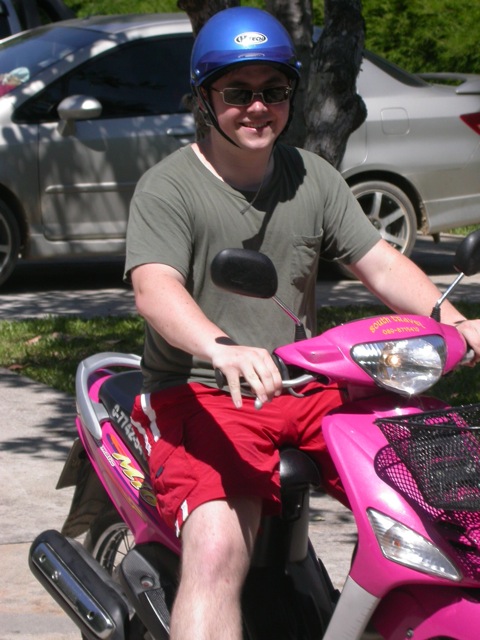
Grant in Thailand
I still remember our effort in Thailand that started with Grant steering up and down the driveway of our hotel and ended with us hailing a cab. We do have a moped at home, and I’m sure that given the time and inclination, Grant would be an excellent motorbike driver. The place to learn is NOT on the streets of Cambodia.
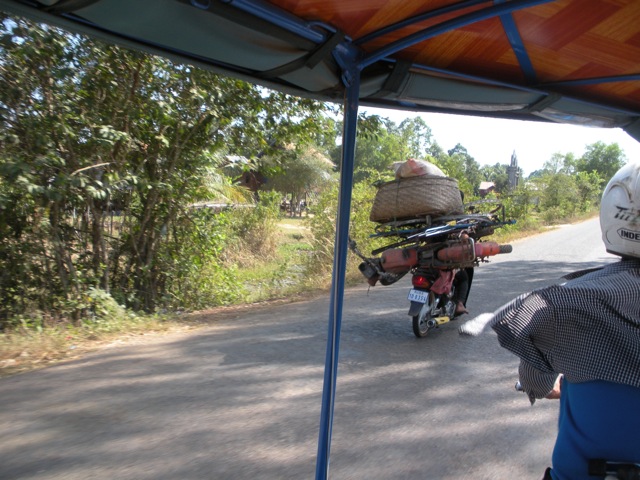
A basket on a bike on a motorbike on a motorbike
From the moment the taxi pulled away from the airport, announcing his merge with the horn, I knew I was going to be a nervous passenger. You see, they all drive with one hand on the wheel and one hand on the horn. I’m not sure what they were trying to say (I don’t speak horn or Khmer), but sometimes it had a bit of attitude and sometimes it was friendly. The basic rule of the road seems to be: I’m bigger, so I’m going first.
I’m not sure if there are any other rules, as it was common to run red lights, turn at will without signaling, and drive on the wrong side of the road. They have a very casual relationship to lane markers, including the central dividing one, and it wasn’t unusual to have three or four “lanes” of traffic moving where only two were marked.
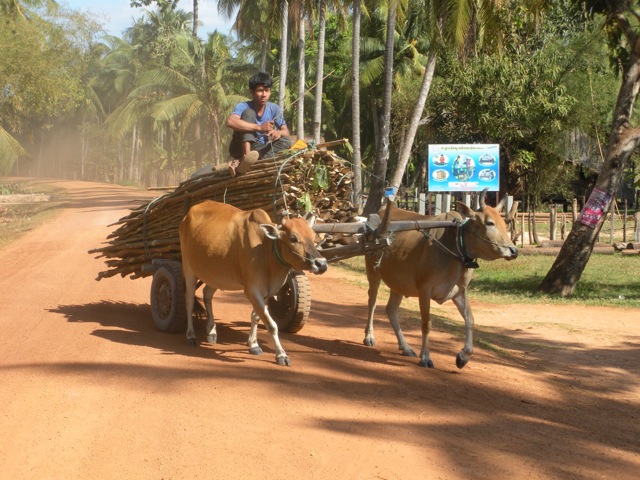
Two cowpower
Bigger is a relative term in a country where six people can ride on a motorbike together, and it’s not unusual to see an enormous load strapped to a tiny vehicle. Anything with wheels that can be propelled by horsepower, manpower, or cowpower goes, and we saw it all! Pigs and chickens headed to market, whole families on a single motorbike, vans stuffed to overflowing with luggage and so many passengers that even the driver was sharing his seat and there were people seated on the roofs!
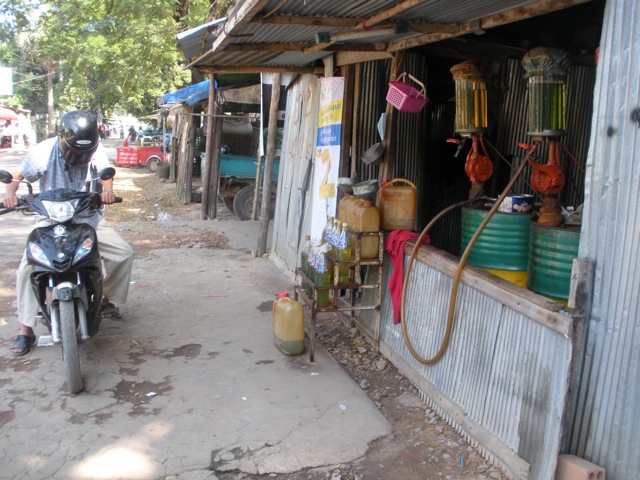
Typical gas station in Siem Reap
In the cities the roads were paved, but on the major country roads (like the road between Phnom Penh and Siem Reap) the pavement was a little intermittent. This made for some bumpy bus rides, but also added to the charm of the tuk-tuk rides around Siem Reap and Kampot.
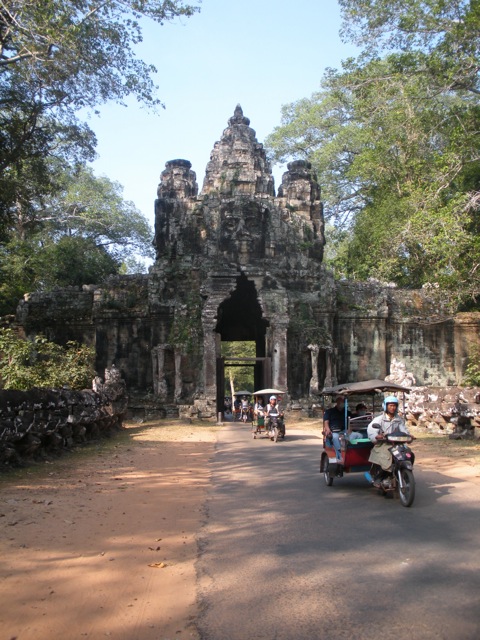
Tuk-tuks exiting the east gate at Angkor Thom
We had our own driver in Siem Reap, arranged through our guesthouse, and he really made the trip for us. His name was Ti, but we called him Mr. T or Speed Racer, affectionately. His vaguely British accented English was very precise, and he had great suggestions for trying to stay one step ahead of the Korean tour buses, as he put it. He was very enthusiastic about sharing his country with us, and on our last day we went exploring across the countryside and we all marveled at how beautiful it was: the emerald rice fields, the dusty red roads, and the huge smiles on the faces of all the kids we passed as we waved like maniacs at each other.
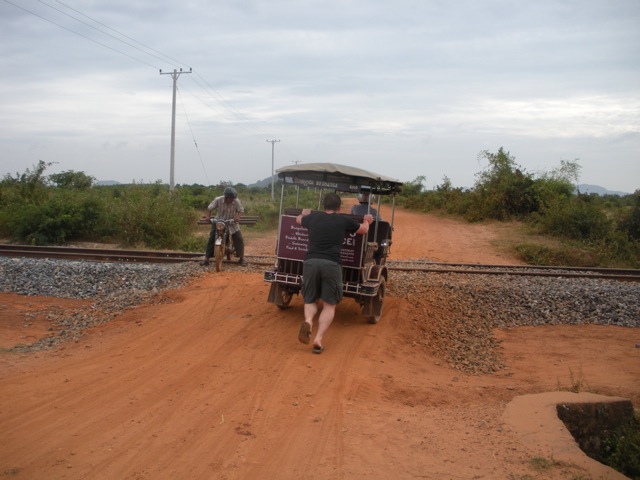
Grant lending a helping hand
In Kampot, we went on a countryside tour via tuk-tuk to the salt fields, limestone cave, the beach and Crab Market at Kep, and to a pepper plantation. Also an interesting drive, especially when we had to get out every time we crossed railroad tracks for Grant to help push the tuk-tuk over. Needless to say, we didn’t call this driver Speed Racer, and we were a little concerned about the amount of gas puddling below his bike when we stopped.
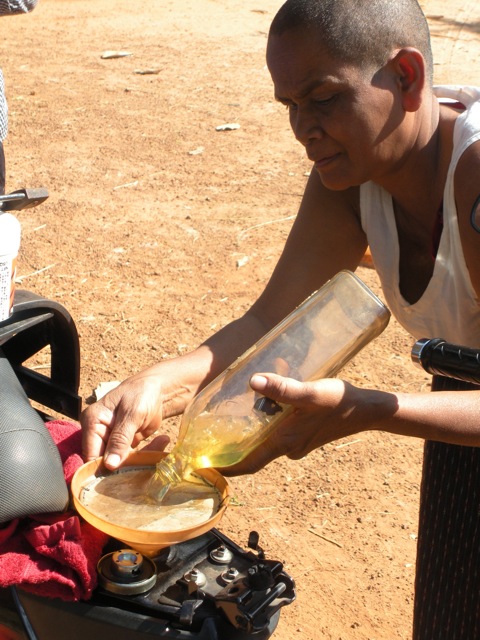
Topping off our tank with a little Johnny Walker
Luckily, there are gas stations everywhere, and they are a bit more informal that you might be used to. All you need is a wooden rack, and funnel, and a few bottles filled with gasoline. Soda bottles or Johnny Walker bottles were definitely preferred, and you pass one of these ad hoc gas stations every few minutes.
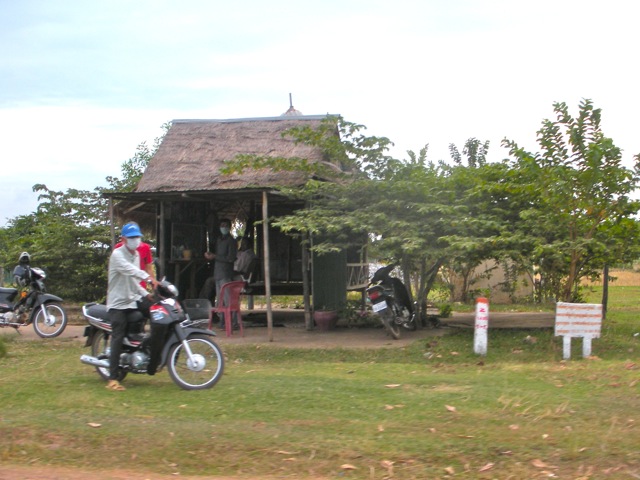
Shave and a haircut, two bits.
There were also lots of casual stores selling baskets, cold drinks and homemade food, but my personal favorite was the roadside barber shop. Only requirement is a roof and a chair, and there was usually someone in the chair either getting a trim or a shave!
We spent a fair amount of time on the road; since there is no passenger train service in Cambodia, bus travel is the primary way to get around. We enjoyed the bus ride on the 24th from Phnom Penh to Siem Reap, which took about five and a half hours. Lovely scenery, but the highlight of that trip for me was a skinny Asian Santa greeting me at the bus station with candy.
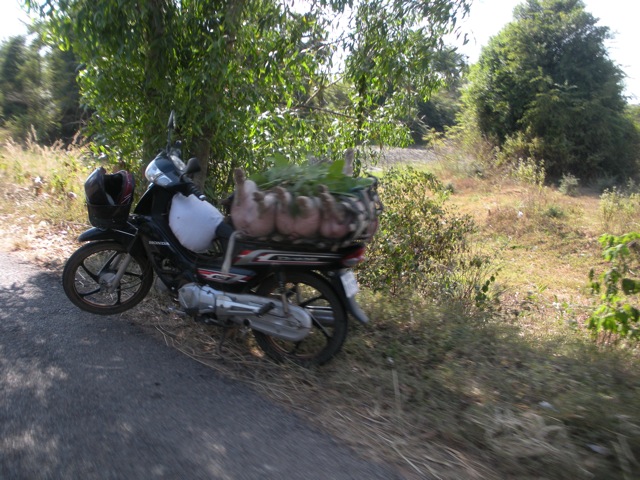
Pigs on their way to market
Slightly different experience on the trip from Siem Reap to Sihanoukville via the night bus: we’d reserved spots on the “sleeping bed” bus, and weren’t sure what to expect. There were three rows of bunkbeds, one against each wall of the bus and one down the middle, with permanently reclined seats. We were in top berths, and the roof of the bus was too low to sit up, so you had to lie down for the entire ten hour trip. It seemed popular with the backpacking crowd (for $18/person, I can see why), and it was a long, noisy, bumpy night. The upside was that I had a window next to me, and with so little light pollution, there were millions of bright stars to watch.
I’m glad we got to see so much of the country, and that transportation was so affordable and easily arranged. More importantly, I’m really happy that we didn’t have to drive ourselves!
Travel planning
If you know me, or my mother, you know that any vacation is prefaced by a lot of research and planning. My mother has done this my entire life, and a few of you have probably even seen the spreadsheets that she makes for trips to DisneyWorld. You might think that I’d rebel against this scientific approach, since I backed away from everything else scientific in life, but I have been on the bandwagon since I was 20 and they were coming to visit me in Paris, and I knew they (ok, mom) would expect a customized guide.
I dove headlong into planning this trip, since we bought our tickets just a couple of weeks in advance, and hadn’t really given much thought to Cambodia apart from wanting to visit someday. Someday came quickly, but don’t worry, I still had time to produce the condensed guidebook that the Blackstones (Creters?) can’t travel without. I kept it to ten pages, and Grant swears he read it. My favorite moments are when he tells me he read “somewhere” that ____. My usual response? Yes dear, that was in the book.
Why do I do this? There are a few reasons:
- I find it helpful to consolidate all of the sources I read prior to traveling, and handy to have a couple of pages highlighting the must-sees (and how to find them) to stick in my pocket when we’re on the road.
- I’ve reconciled to the fact that Grant will never read a whole guidebook, but at least this way he’ll have an idea of where he’s going (and the ability to veto/request stops). It actually makes me feel like less of a tour director.
- This is an easy way to show family and friends where we are going, and prior to this blog was the only way!
- It’s a great record of where we’ve been, and makes it easy to look back at previous trips and make suggestions to others visiting the same area.
That’s not to say that we do everything that is listed, or that our days are excessively scheduled. We certainly make time to hang out by the pool or have a drink or two, and just to wander the neighborhood that we’re staying in. I just wouldn’t want to miss out on the greatest “fill in the blank” right around the corner from us.
Anyway, if you’re curious, here’s the travel plan from Cambodia. Don’t be scared, and don’t laugh too loudly – it really is genetic.
“Home” from Cambodia
And the surprising thing is, KL does feel a bit like home. We had a wonderful trip to Cambodia and really fell in love with the people and the country. I’d go back in a heartbeat. I’ll share more stories and photos later, but for now here we are on Christmas morning.
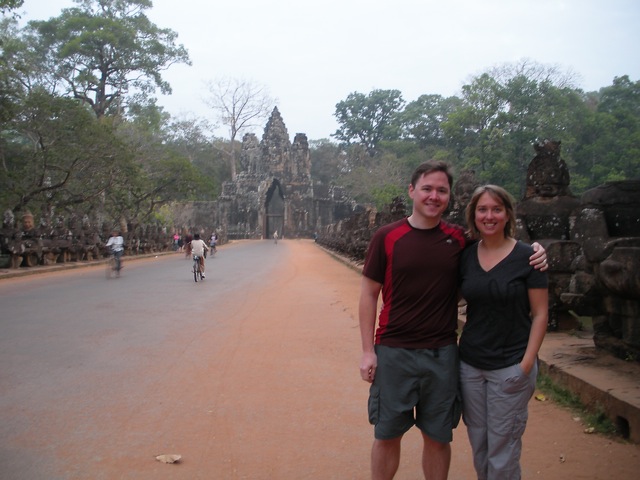
South Gate of Angkor Thom on Christmas morning
Monkey Nirvana
Also known as the Batu Caves. We’ve been doing at least one pretty touristy thing each weekend, and this weekend we hit the Batu Caves.
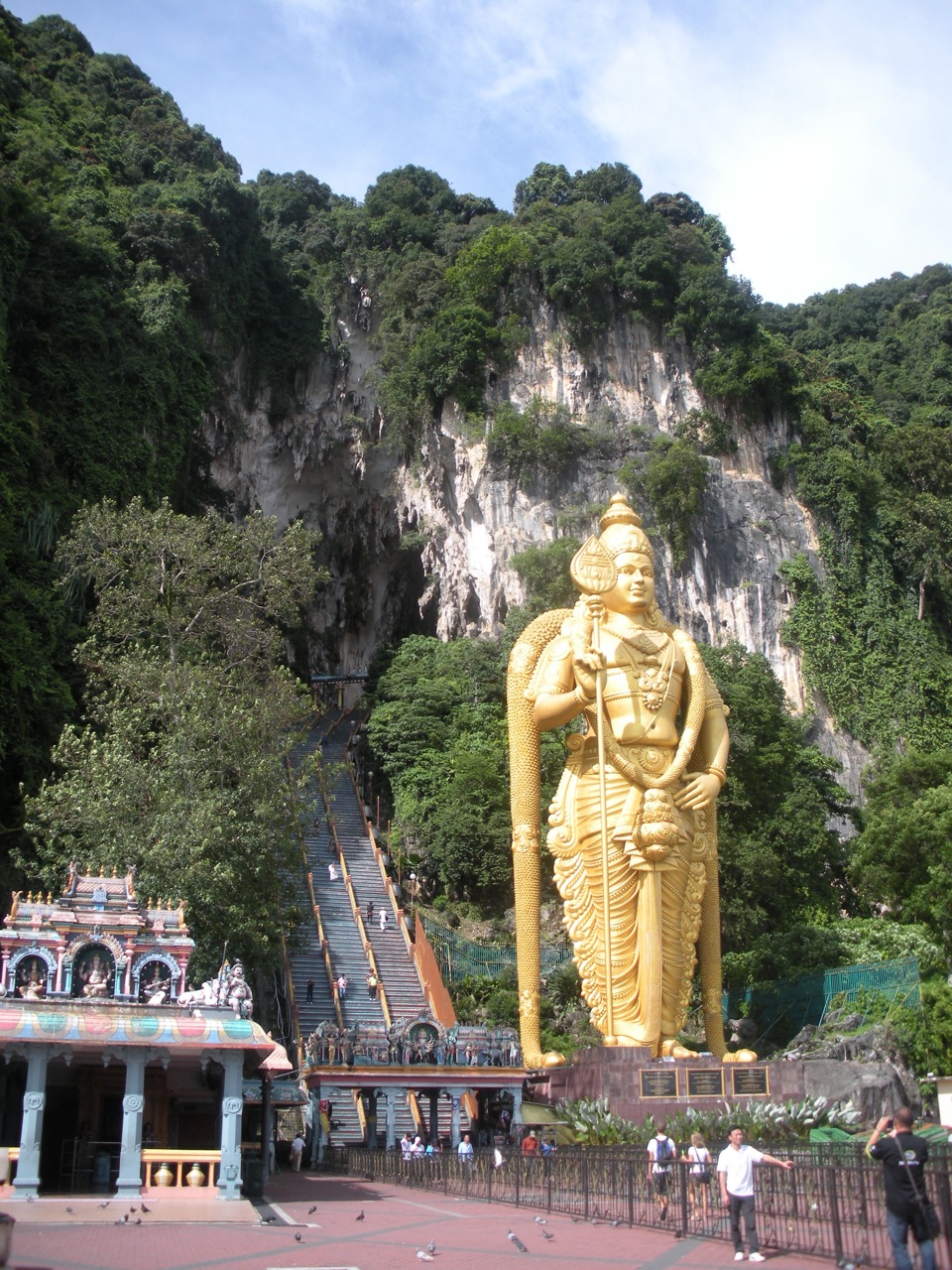
From Grant's first visit
Grant had visited here back in September, which is why I’d been putting it off a little, but we both enjoyed it and I’m sure we’ll be back here again with visitors. It’s touristy, but in a pleasant way: lots of Indian snacks, statuary, steps, and monkeys.
Lots of monkeys. Maybe I should say that one more time: monkeys everywhere.
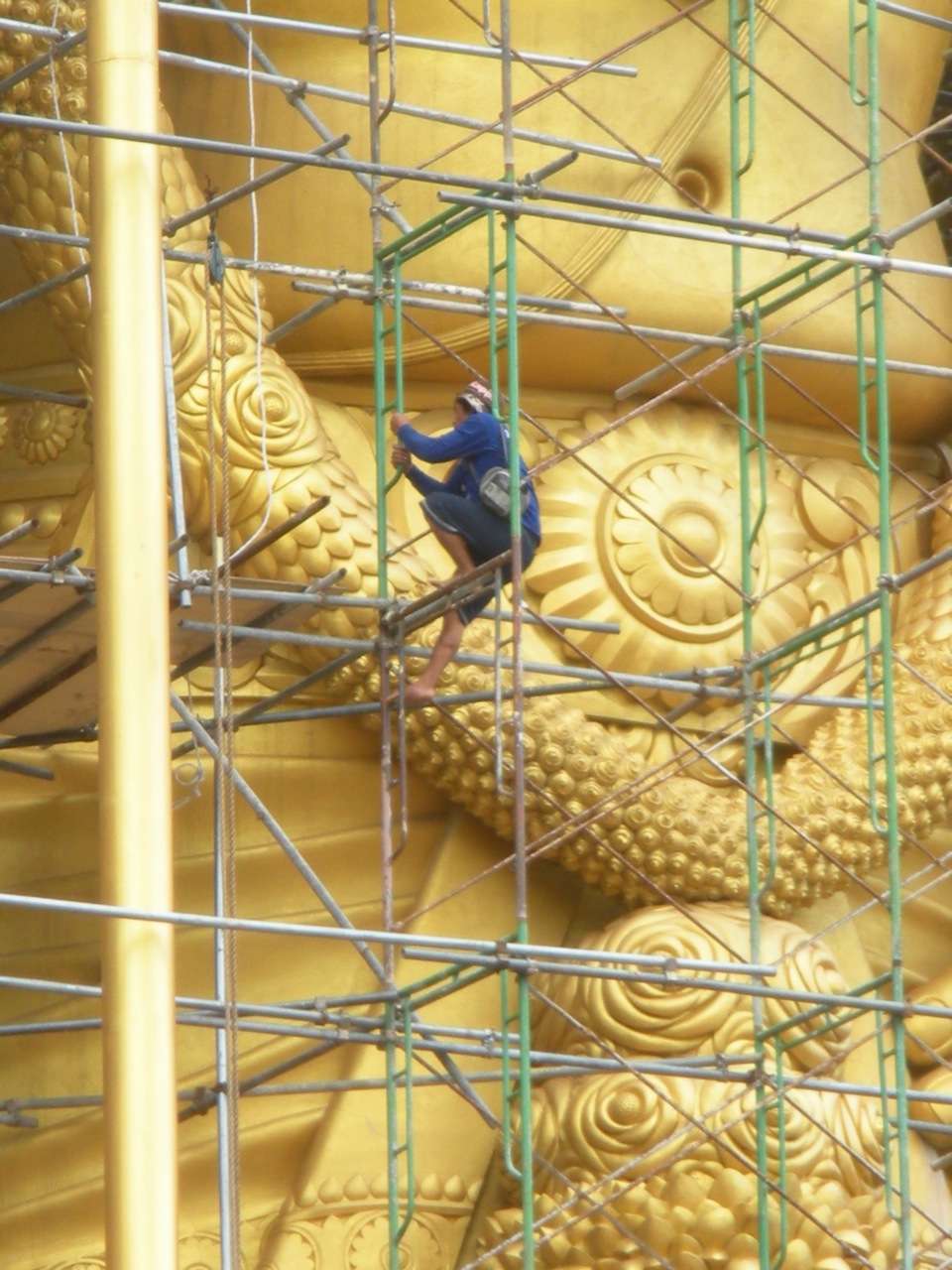
Man or monkey?
First, the caves, which were in fact the reason why we were there, and the reason I would return. Well, the main reason I’m going to say I’m returning. I might be going back for the monkeys too.
The caves are just about 8 miles north of KL, and it’s actually a series of caves within a huge limestone hill. We visited the main one, Temple Cave, which has several Hindu shrines in it and is at the top of 272 steep steps up the hillside. Beside the steps is a giant statue of Murugan (the largest in the world), which was framed by light scaffolding now. We watched workers climbing the scaffolding like monkeys, and then noticed monkeys climbing the scaffolding like….well, you know. I got a kick out of watching the monkeys stealing the workers’ drinks.
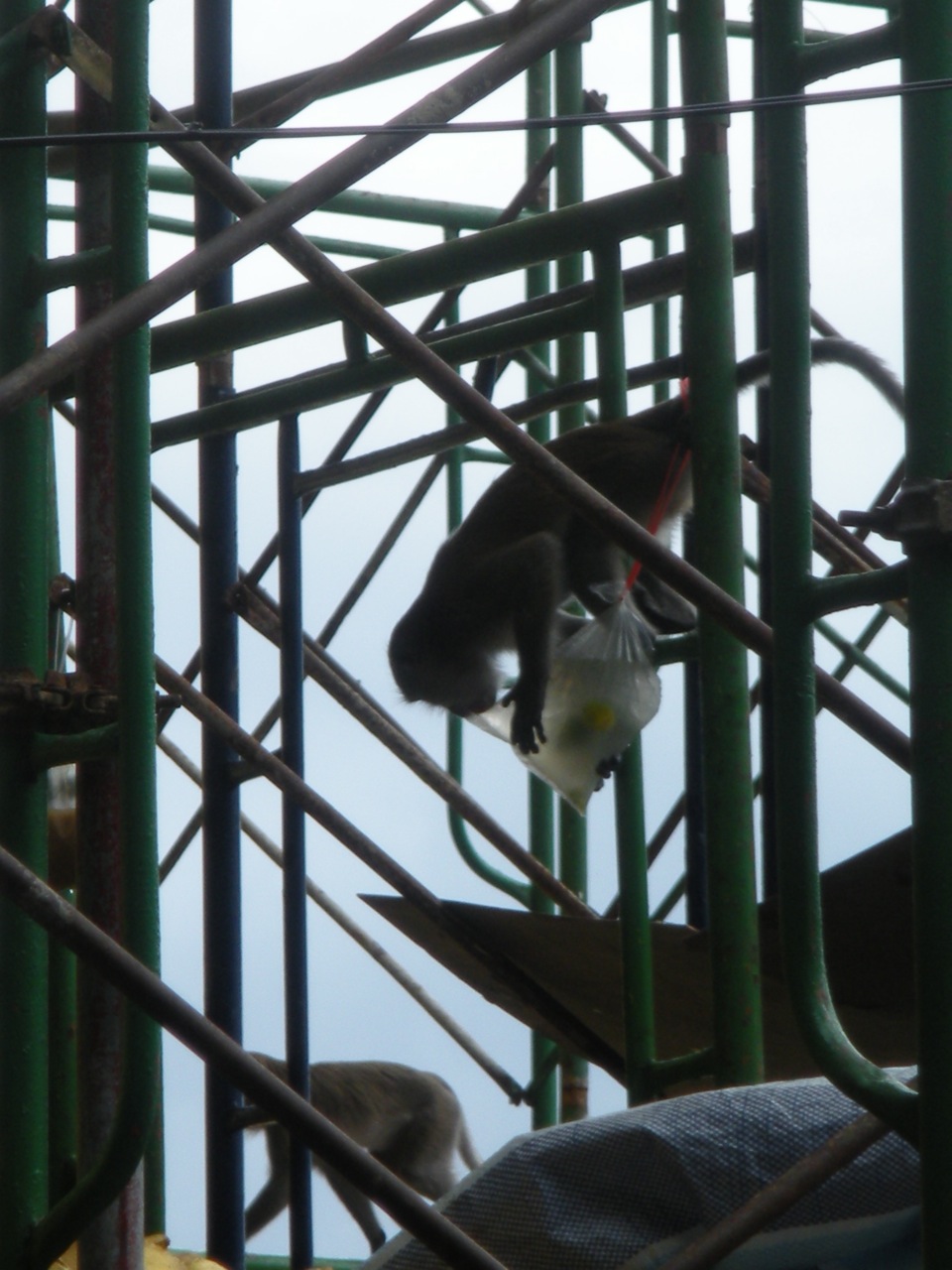
Thief!
Apparently, Murugan is a Hindu deity of war and victory, and he carries a Vel (translates to lance or spear). He is worshipped primarily in areas with Tamil influence, and the festival of Thaipusam honors him. We’ve been told we’ll need to come back to the Batu Caves for this one, as millions of worshippers from all over will be here to take part in a procession that begins in KL and ends here. During this pilgrimage, they carry burdens, which range from a jug of milk to piercing their skin and tongues with skewers and small spears: the greater their pain, the greater the merit they earn.
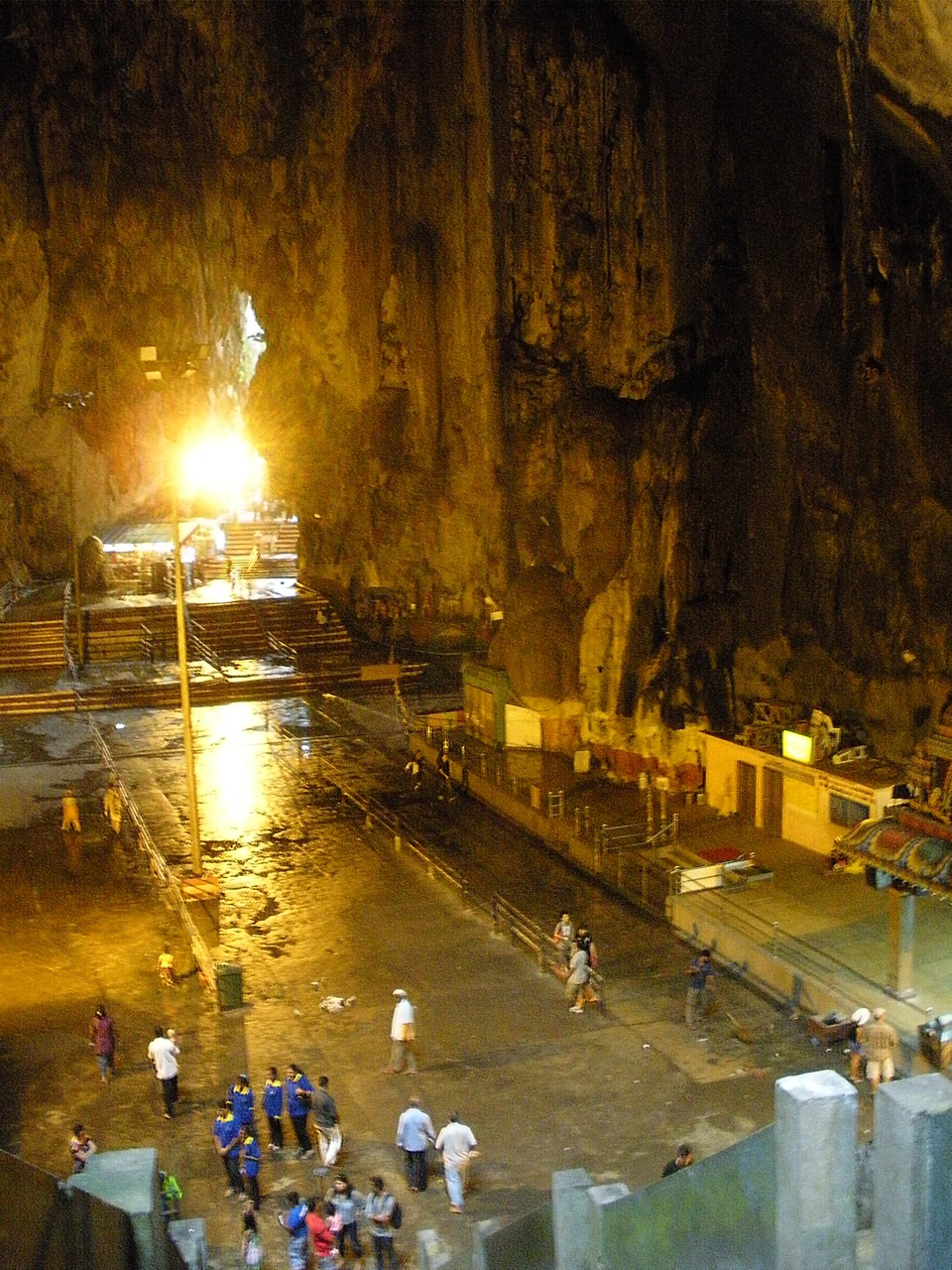
Interior of Temple Cave
The caves themselves are craggy, dim, dripping with water, and randomly lit by unnecessary sulphur lamps. The shrines inside are dwarfed by the high-arching ceiling, and we were mostly impressed with the natural beauty of the caves rather than the shrines.
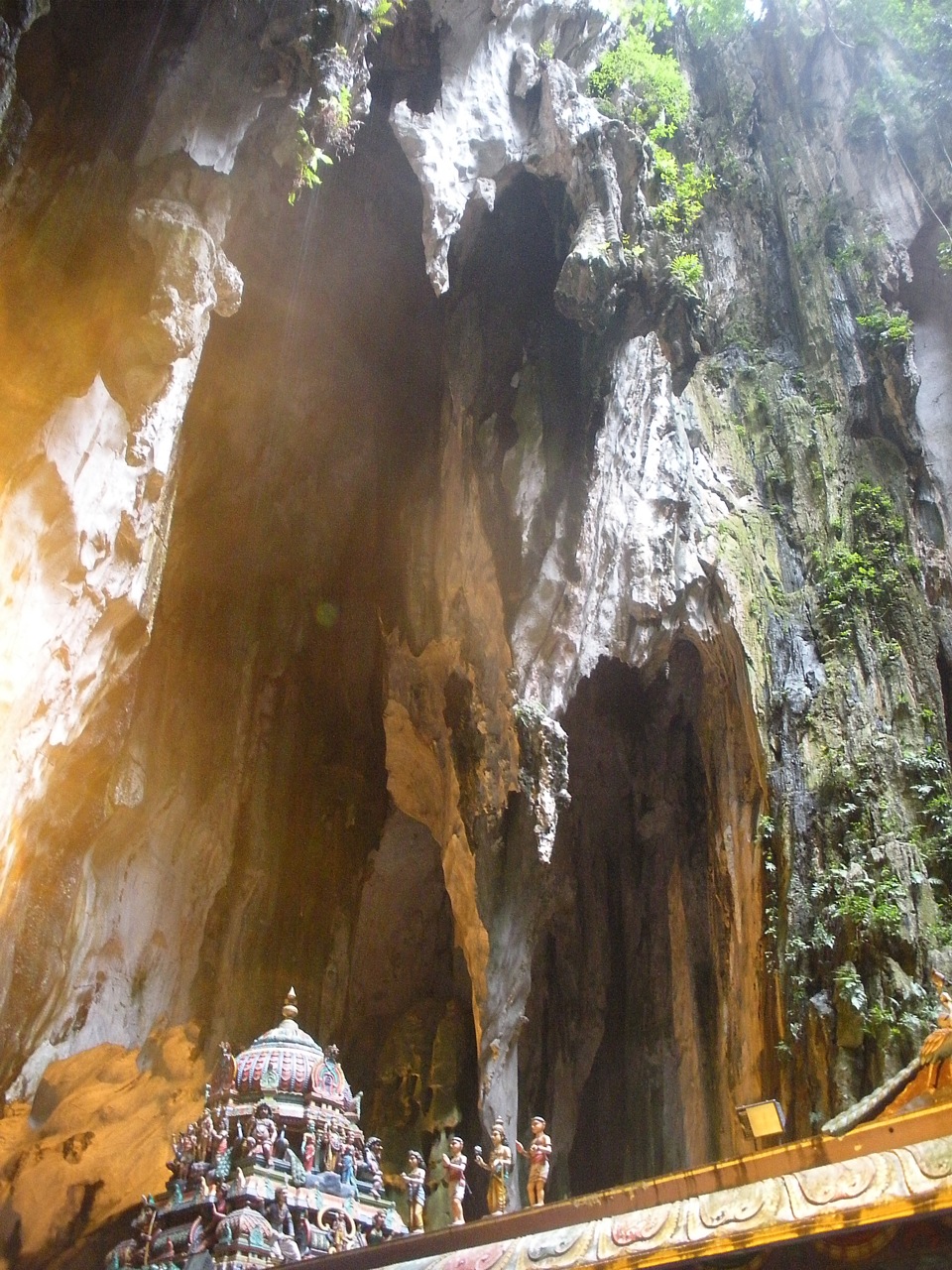
Craggy overhang
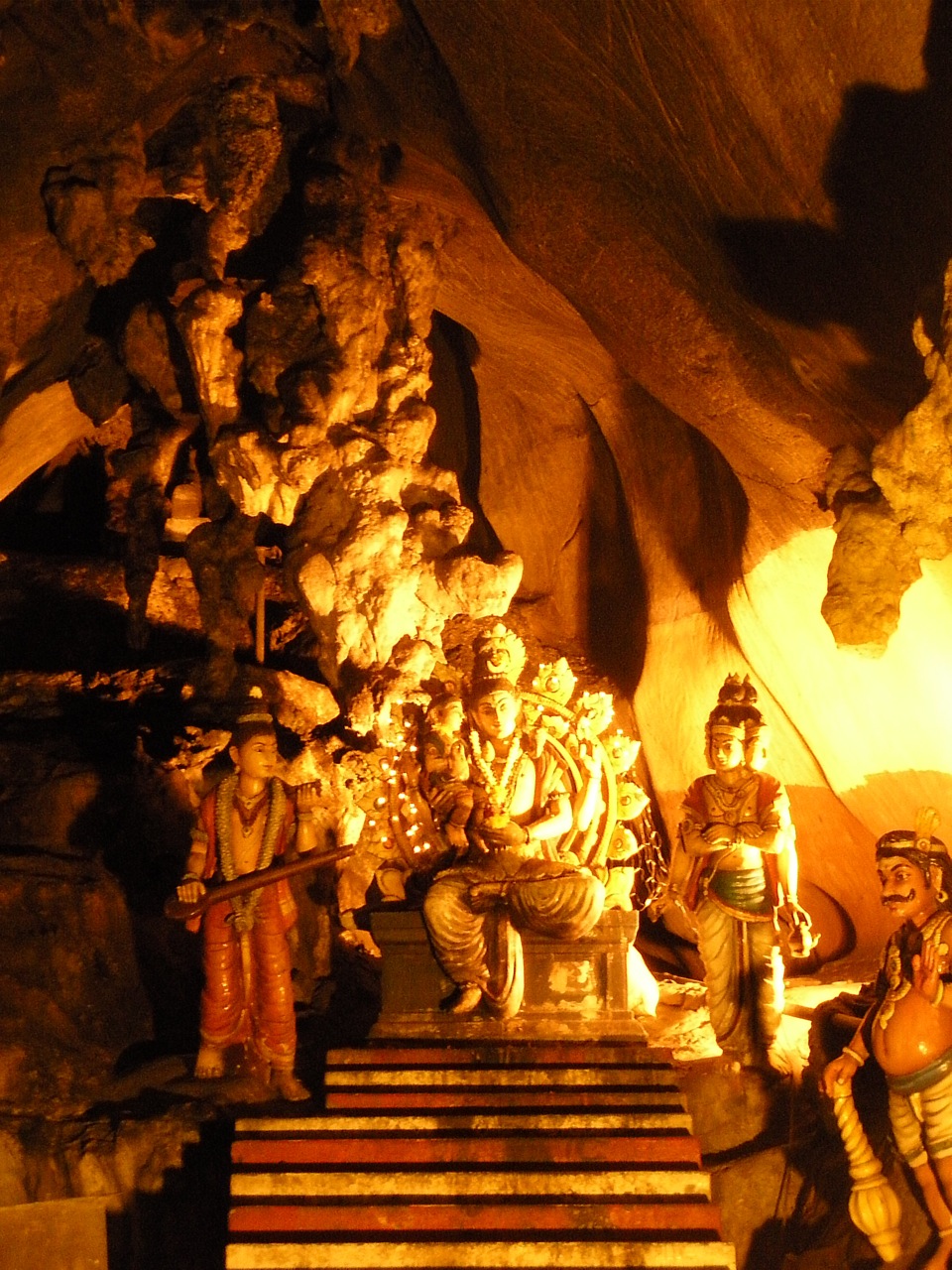
Shrine in the caves
The trip back down the stairs was interesting. Hard for me, because you know how fond of heights I am, and the monkeys were a bit more active. We were getting closer to a mama monkey with her baby clinging to her chest, and while I was standing back on a landing trying to get a photo of her sitting on the railing, a guy accidentally grabbed her as he was reaching for the handrail. She wasn’t pleased, and made a beeline for Grant and me, since we were standing between her and the edge of the stairs closest to the trees. We awkwardly danced around her, and made our way carefully down the rest of the steps.
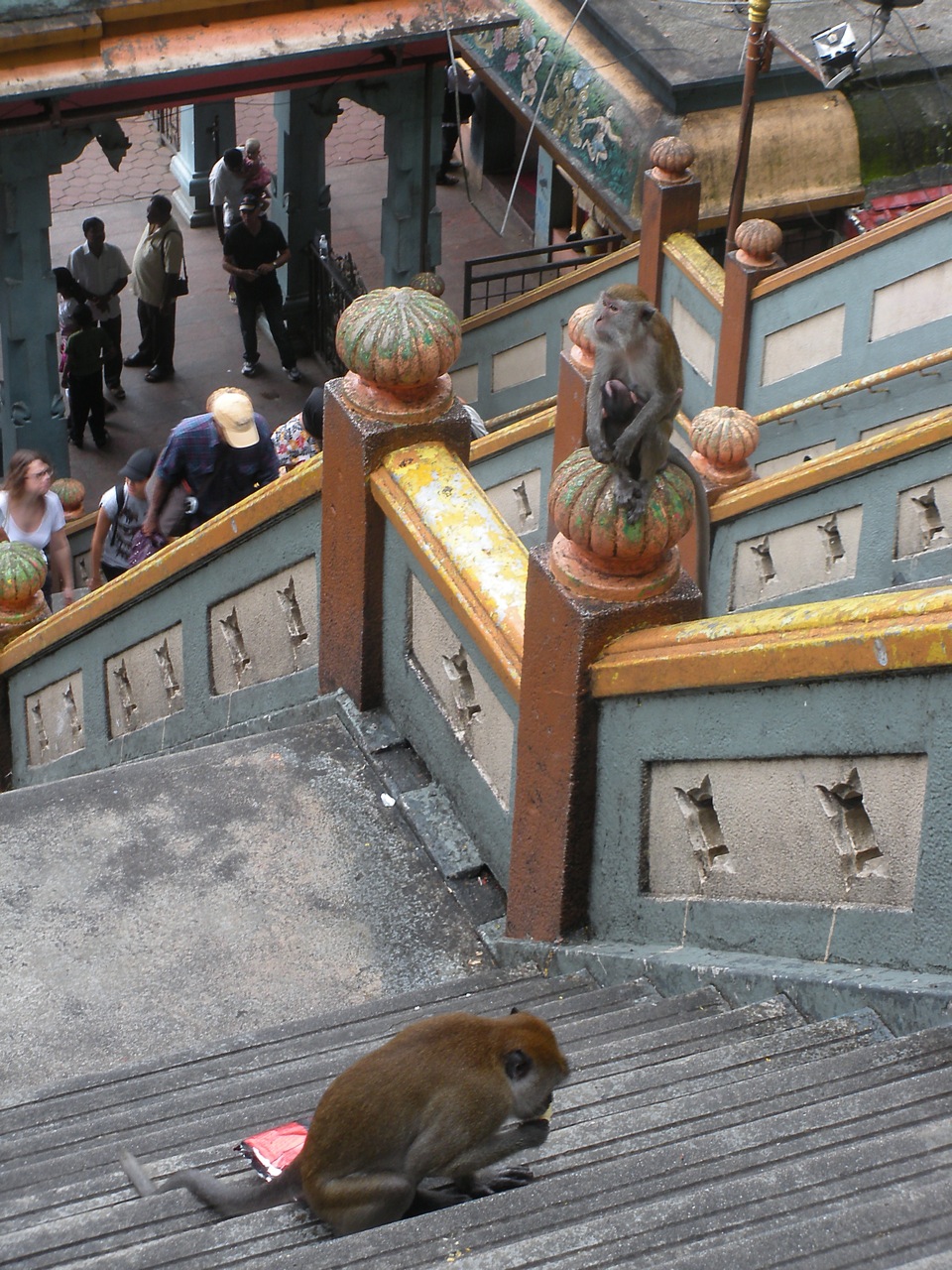
Up close and personal
Ok everyone, 272 steps and more monkeys than you can count. What do you think the greatest hazard is going to be? Wait for it….
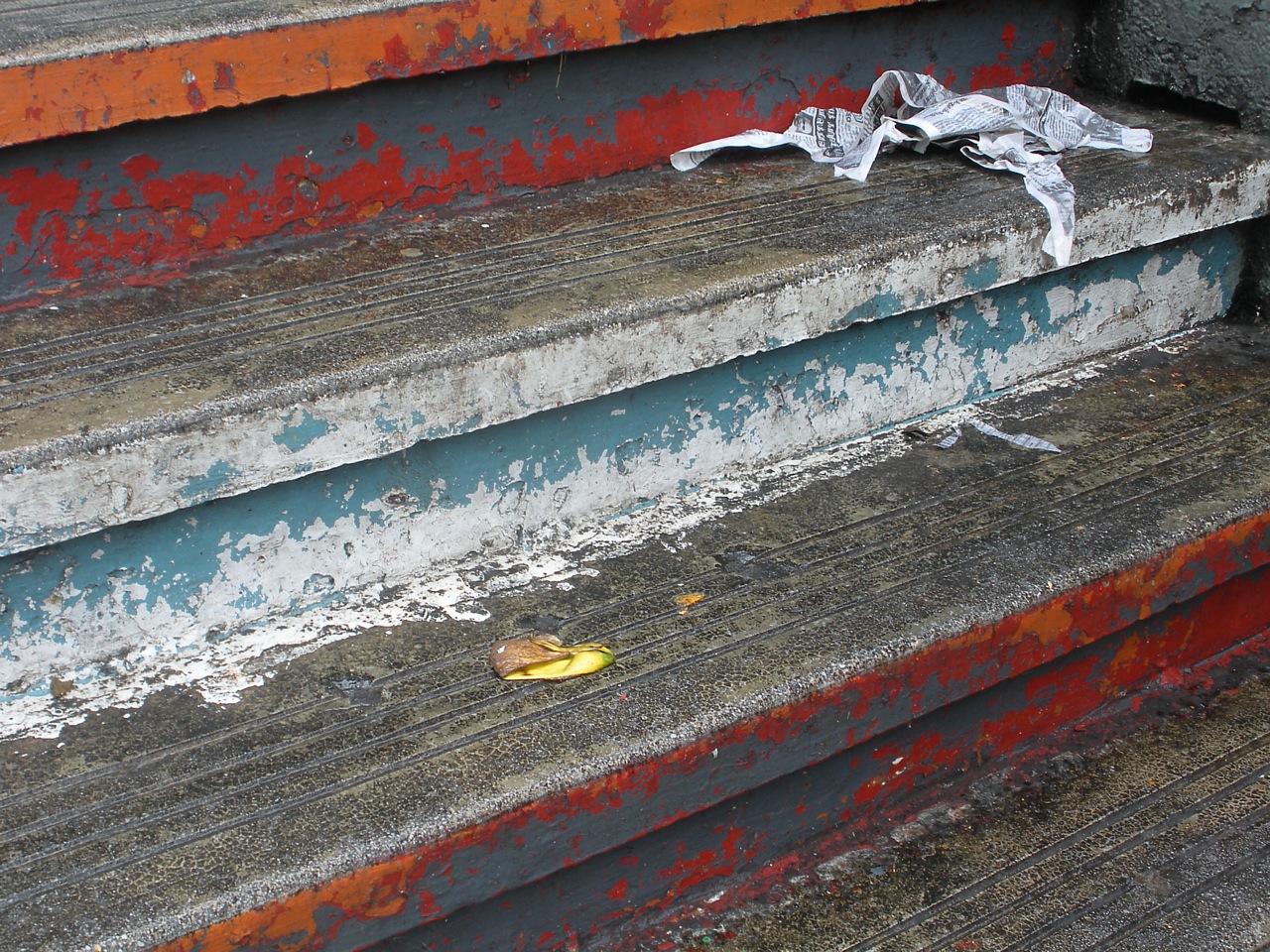
Banana peels!
Some (crazy) people like to feed the monkeys here. We were walking around the base of the caves area, and you’d see the trees gently twitching as monkey acrobatics were taking place. All it took was one guy with a piece of fruit, and suddenly the monkeys started swarming down off the hillside. They are a little aggressive, and certainly have no fear of people. Of course, it’s quite the high life for them: plenty of free food, trees and buildings to climb, and a constant stream of tourists here to worship…them? I can see how it would go to their heads.
The taxi ride home was a new experience for us too, when our driver announced that he needed to gas up or else we’d end up pushing the car back to KL. He checked the meter with us before we stopped, and said we’d just check it again before we continued and subtract the cost of the stop – pretty reasonable. Then he pulled up to the pump, left the car running and opened the hood. We figured he was going to check something out, but then he proceeded to put a large hose into the engine compartment and we heard a loud hissing noise as he filled the tank (from the sounds of it, located in the trunk) with compressed natural gas. That was a first, although it looks pretty common for taxis here. Our driver was complaining about the lack of pressure, and I would have thought that Grant would have a million questions, but it left him speechless!
Christmas in Southeast Asia
I‘m not particularly feeling like we’ve entered the holiday season; I think it has to do with the fact that Thanksgiving was a blur, it is always in the high 80s – low 90s here, and I see palm trees everyday.
Never fear, even though the primary religion here is Islam, KL celebrates Christmas, and they mean Merry Christmas, none of the generic Happy Holidays stuff. It’s like the whole city is determined to get me into the Christmas spirit.
It seems that most of the Christmas songs you hear at home are of the “Santa Claus is Coming to Town” variety, and you certainly hear those in KL too, but you also get honest to goodness Christmas carols straight out of your hymnal played through the speakers of every store and most restaurants. It’s interesting to hear more religious Christmas music in an Islamic country than you hear in the United States!
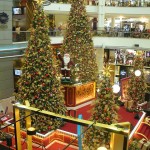
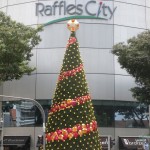
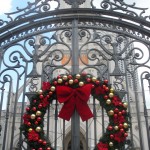
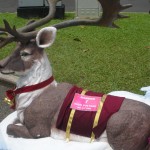
Even though I haven’t done any decorating, because we’ll be spending Christmas and New Year’s in Cambodia, I’m getting my daily dose of Christmas cheer every time I step out of my door. Without further ado, here’s how they do Christmas in Southeast Asia.


Chris Blackstone, Batik Artist?
On one of my first days in KL, when we were staying at the Prince Hotel, I wandered down the street to an arts and crafts complex: Kompleks Kraf. I love the phonetic spellings here: teksi eksekutif, polis, basikal, motosikal, kopi, teh, restoran, stesen, helo – the list goes on and on.
Anyway, I’d noticed it on our first taxi ride into town, and I thought maybe I’d find some handmade souvenirs or Christmas presents. The complex is fronted by a large building with your standard gift shops selling lots of batik fabrics, woven boxes and baskets, metalwork, and the ubiquitous I ♥ KL T shirts. If you make your way behind this building, there’s a semi-circular collection of small huts and each is rented by a different craftsman: mostly woodcarvings, ceramics and batik.
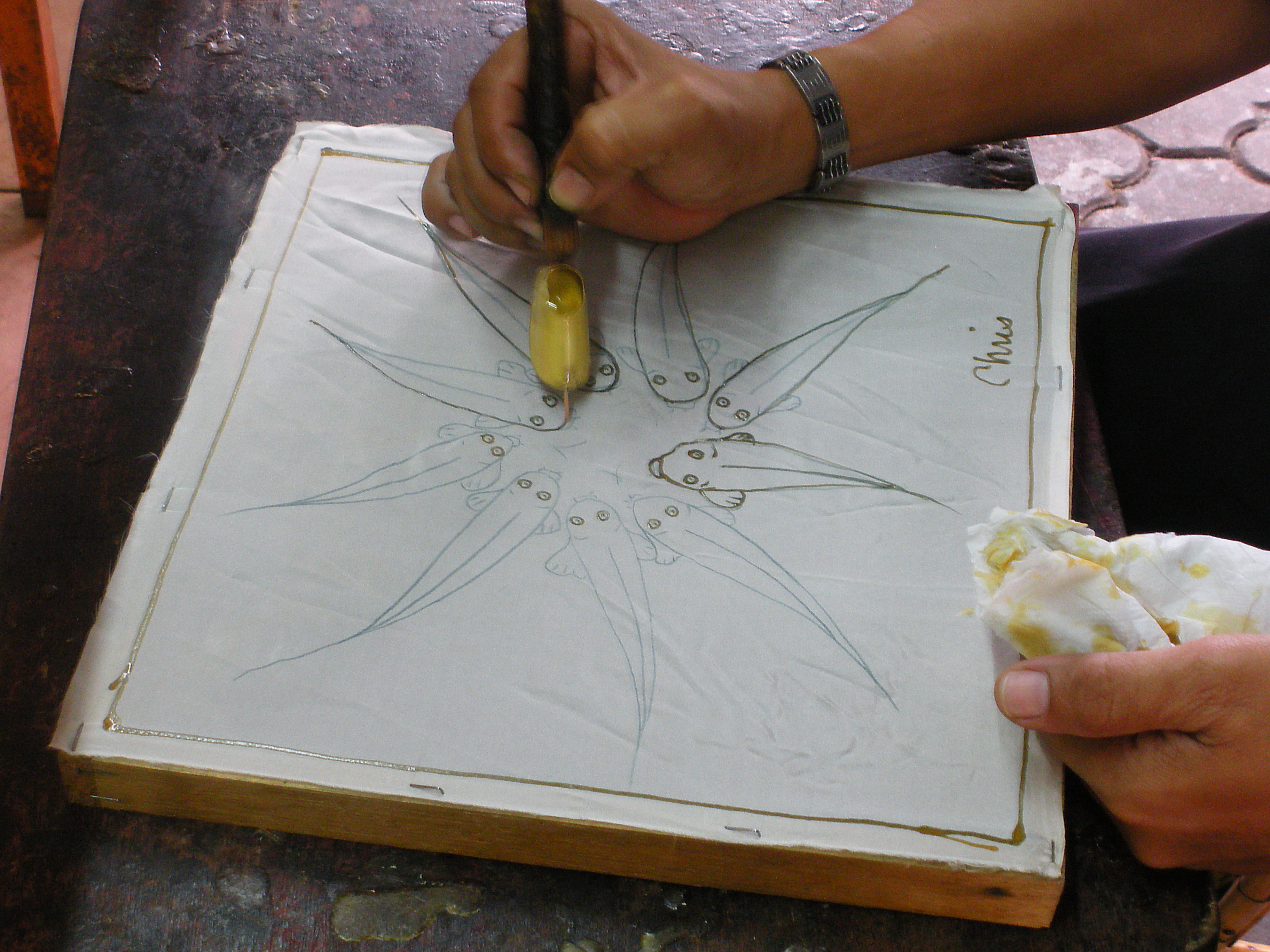
Lazim waxing the design
I had been wandering through these, just smiling and nodding at the artists, and then a cheerful man leapt up and started talking to me. I figured it would be the typical “please look at my work, you like, you buy?” sort of conversation, and I laughed it off when he said he could teach me how to do it. No, Lazim was actually serious about that, and it turns out there are a few batik artists there who will let you sit in their open air studios and give it a shot. They often have pre-waxed silk squares, but they also have thick books of designs that you can pick from.
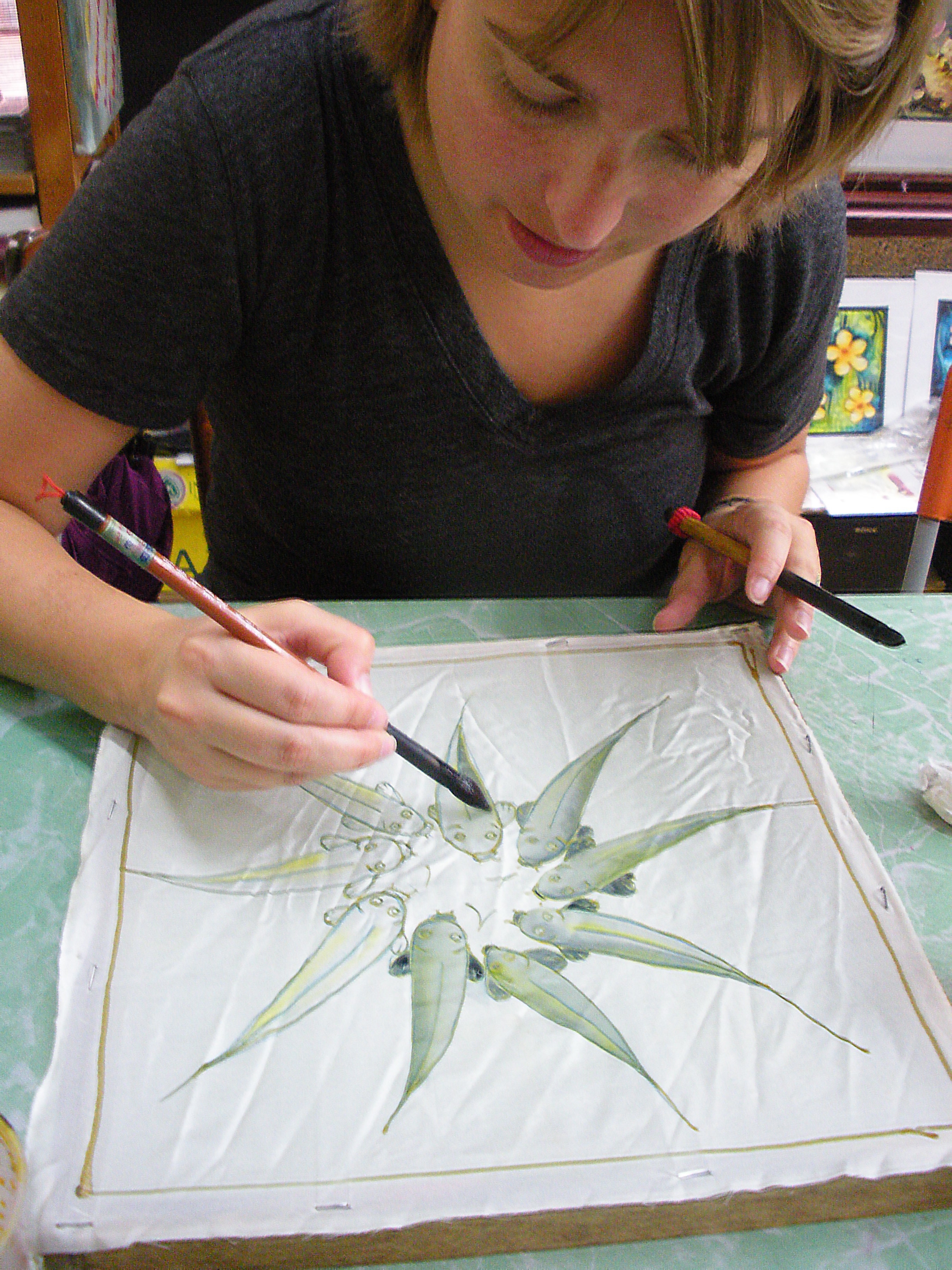
Who knew I could be an artist?!
Lazim is very welcoming and encouraging, and his original work hangs all around you, lending inspiration. I’ve made three designs so far, and I’m having so much fun! It’s been pretty straightforward: I trace a design onto the silk, Lazim applies the wax over my design, and then I paint on dyes with a bit of coaching from him. He’s been making batik art for 30 years, so I’m listening carefully to the expert. Next time, he says I should try waxing it myself (I’ve only signed my name with the wax). No caffeine for me that day – I’ll need a really steady hand!
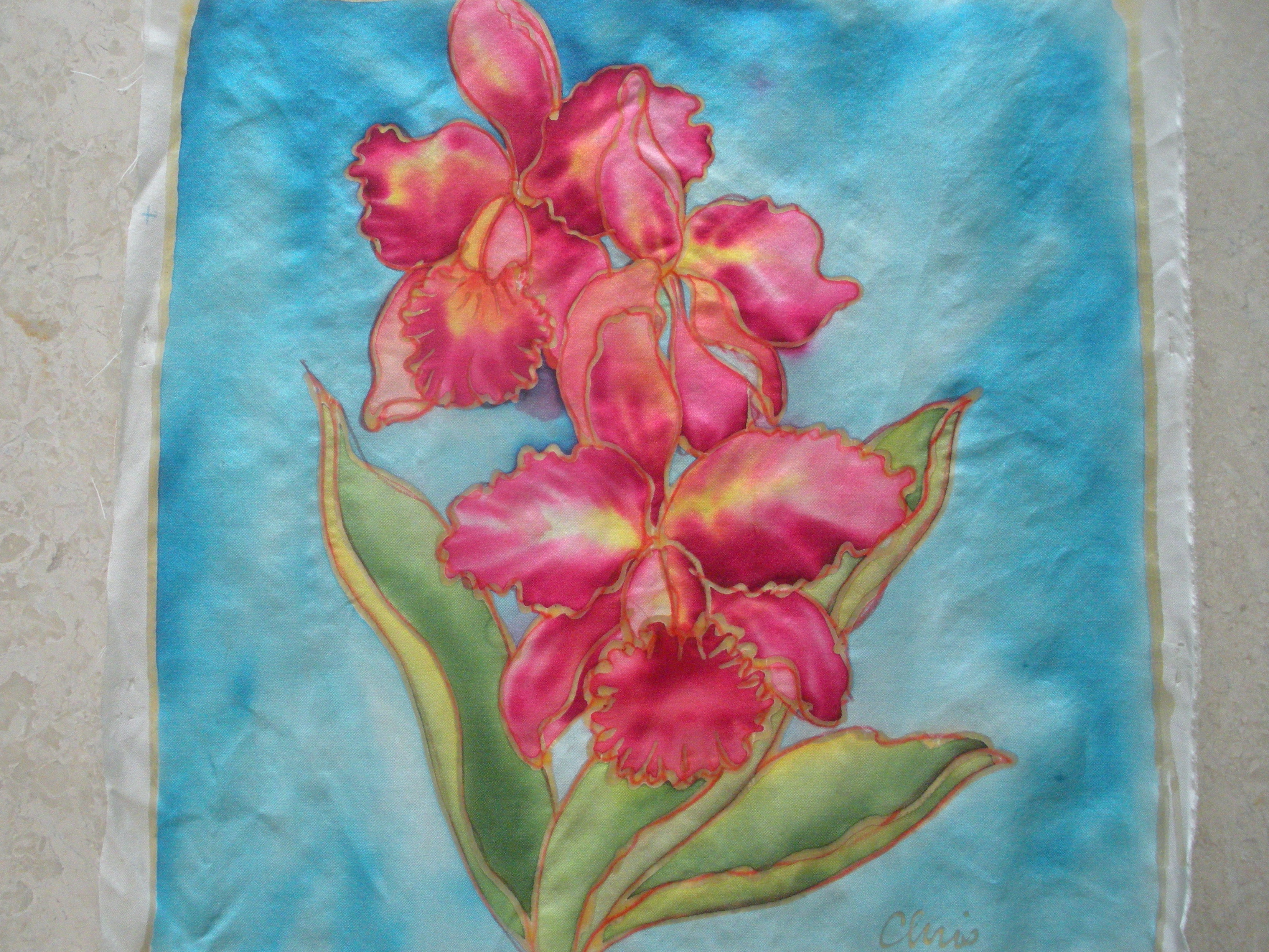
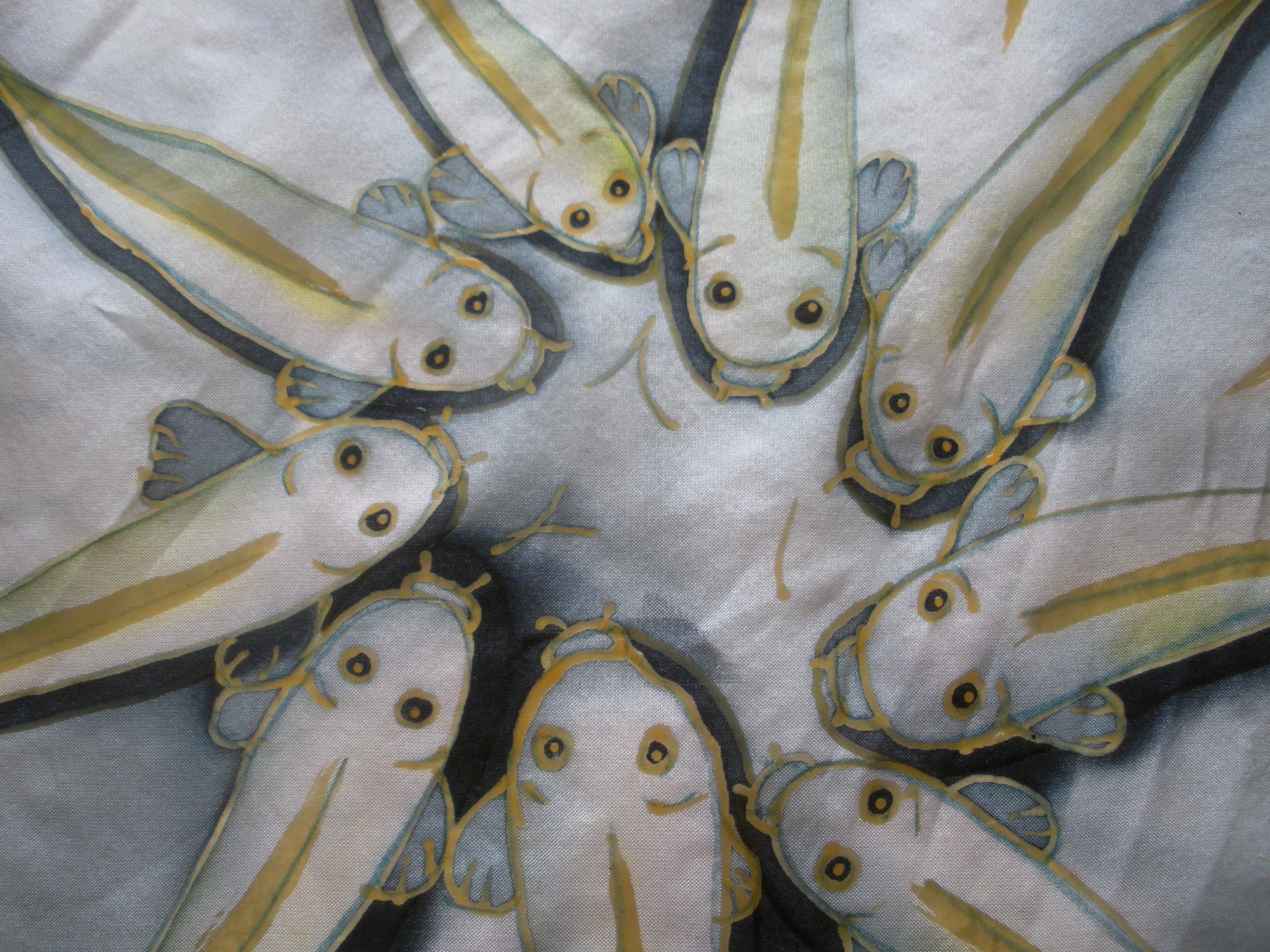
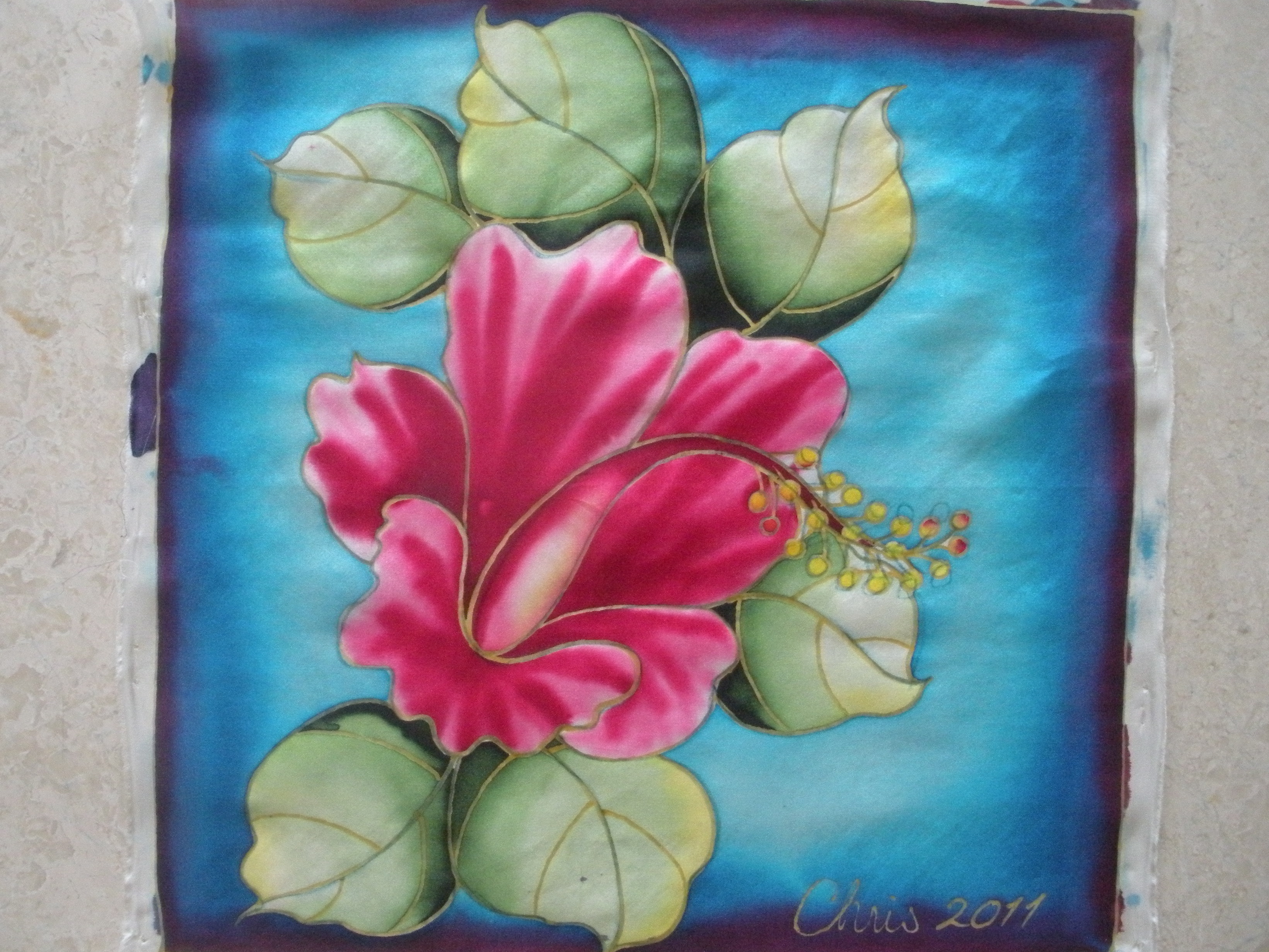
What do you think, is this a new calling for me? I don’t know, but I’m having a great time!
Recent Comments