
Monkey Nirvana
Also known as the Batu Caves. We’ve been doing at least one pretty touristy thing each weekend, and this weekend we hit the Batu Caves.
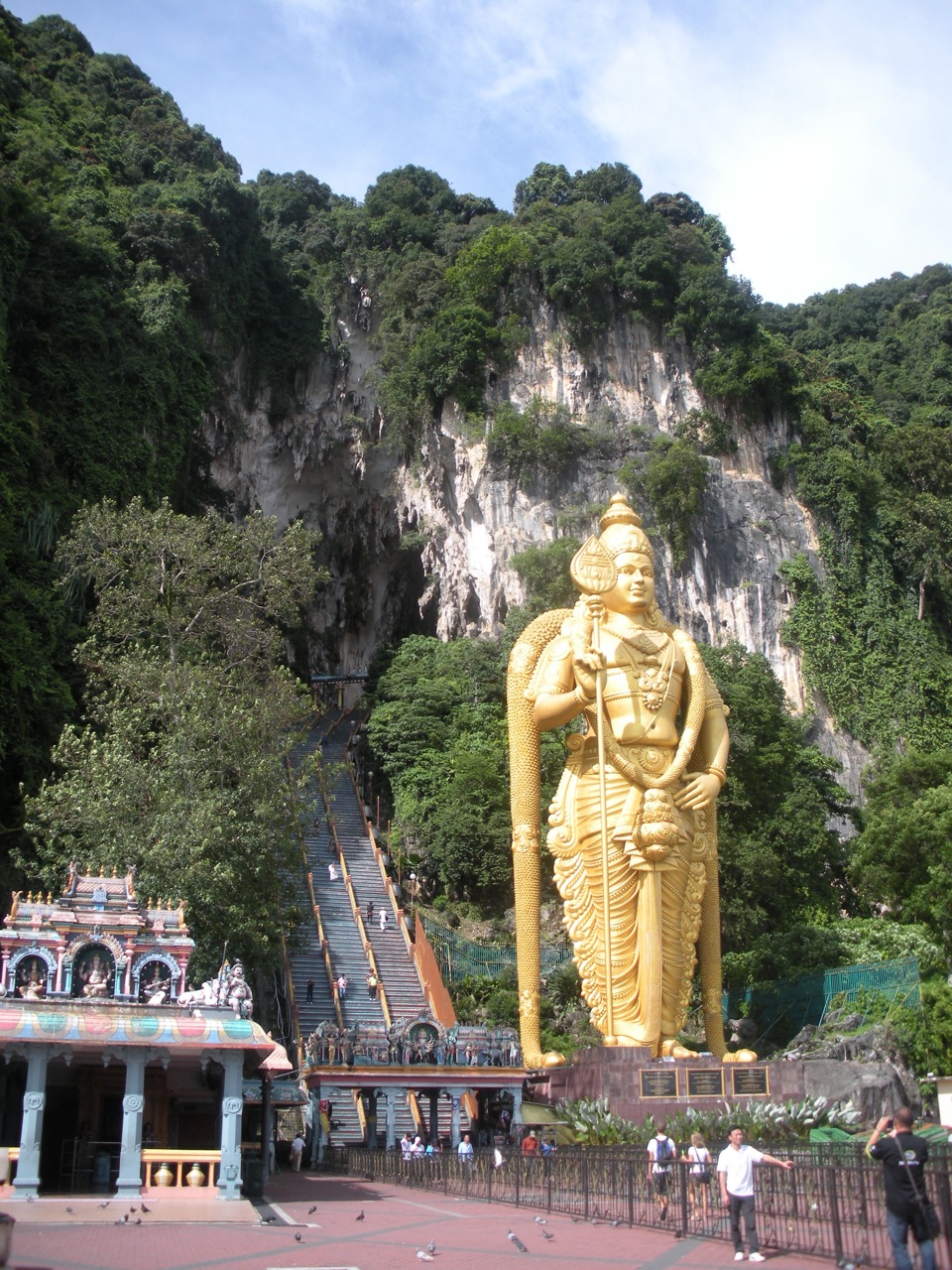
From Grant's first visit
Grant had visited here back in September, which is why I’d been putting it off a little, but we both enjoyed it and I’m sure we’ll be back here again with visitors. It’s touristy, but in a pleasant way: lots of Indian snacks, statuary, steps, and monkeys.
Lots of monkeys. Maybe I should say that one more time: monkeys everywhere.
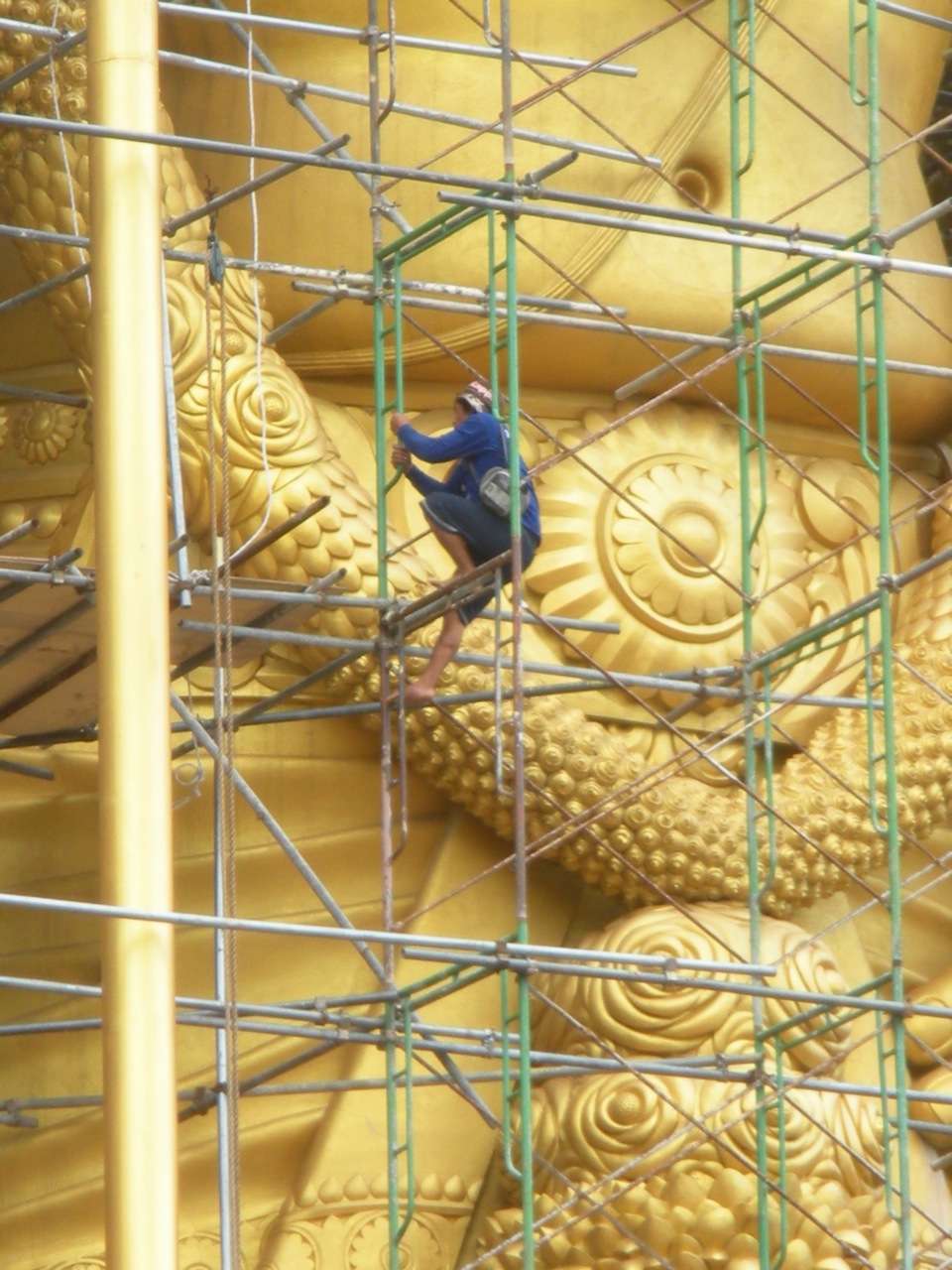
Man or monkey?
First, the caves, which were in fact the reason why we were there, and the reason I would return. Well, the main reason I’m going to say I’m returning. I might be going back for the monkeys too.
The caves are just about 8 miles north of KL, and it’s actually a series of caves within a huge limestone hill. We visited the main one, Temple Cave, which has several Hindu shrines in it and is at the top of 272 steep steps up the hillside. Beside the steps is a giant statue of Murugan (the largest in the world), which was framed by light scaffolding now. We watched workers climbing the scaffolding like monkeys, and then noticed monkeys climbing the scaffolding like….well, you know. I got a kick out of watching the monkeys stealing the workers’ drinks.
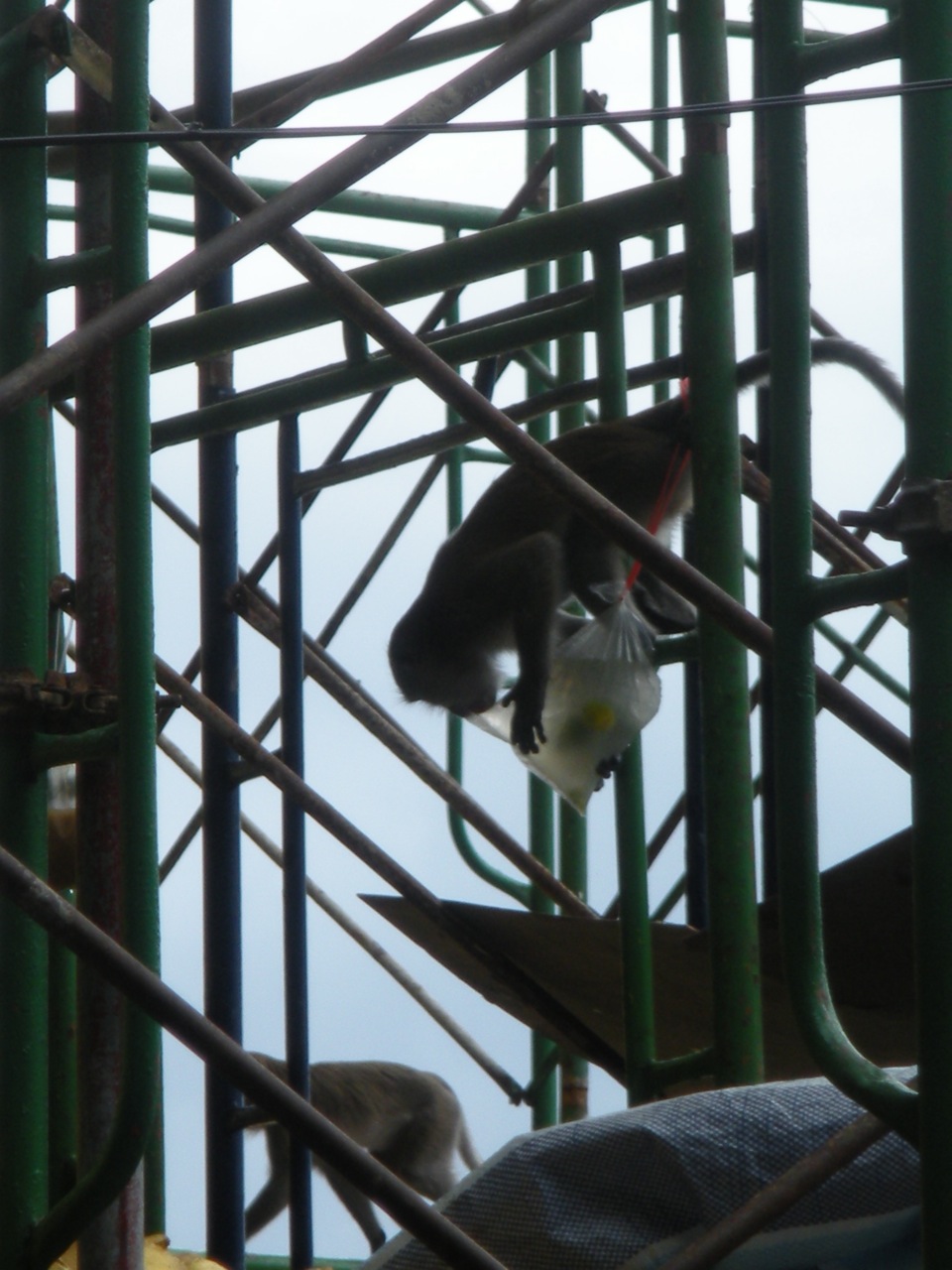
Thief!
Apparently, Murugan is a Hindu deity of war and victory, and he carries a Vel (translates to lance or spear). He is worshipped primarily in areas with Tamil influence, and the festival of Thaipusam honors him. We’ve been told we’ll need to come back to the Batu Caves for this one, as millions of worshippers from all over will be here to take part in a procession that begins in KL and ends here. During this pilgrimage, they carry burdens, which range from a jug of milk to piercing their skin and tongues with skewers and small spears: the greater their pain, the greater the merit they earn.
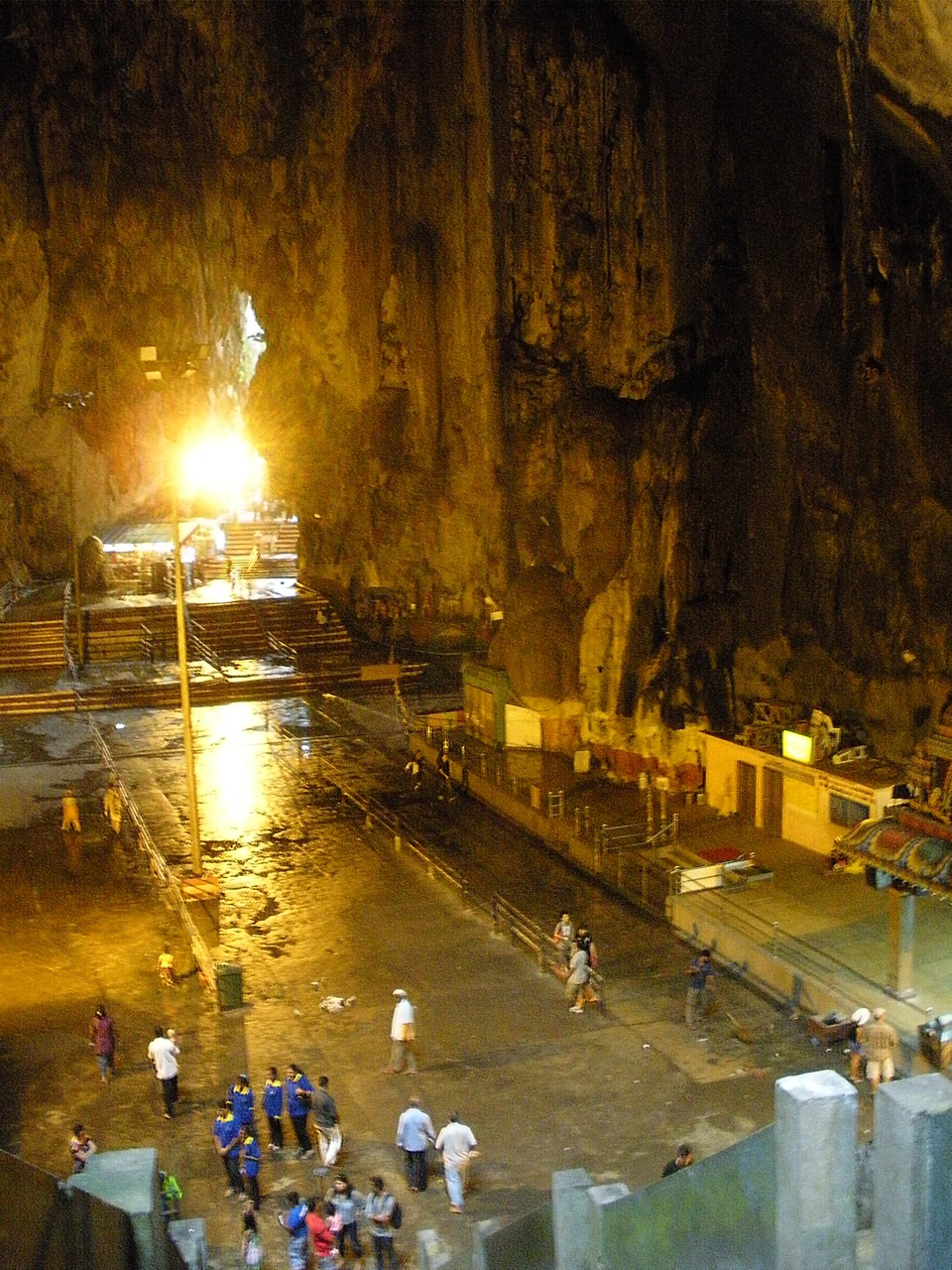
Interior of Temple Cave
The caves themselves are craggy, dim, dripping with water, and randomly lit by unnecessary sulphur lamps. The shrines inside are dwarfed by the high-arching ceiling, and we were mostly impressed with the natural beauty of the caves rather than the shrines.
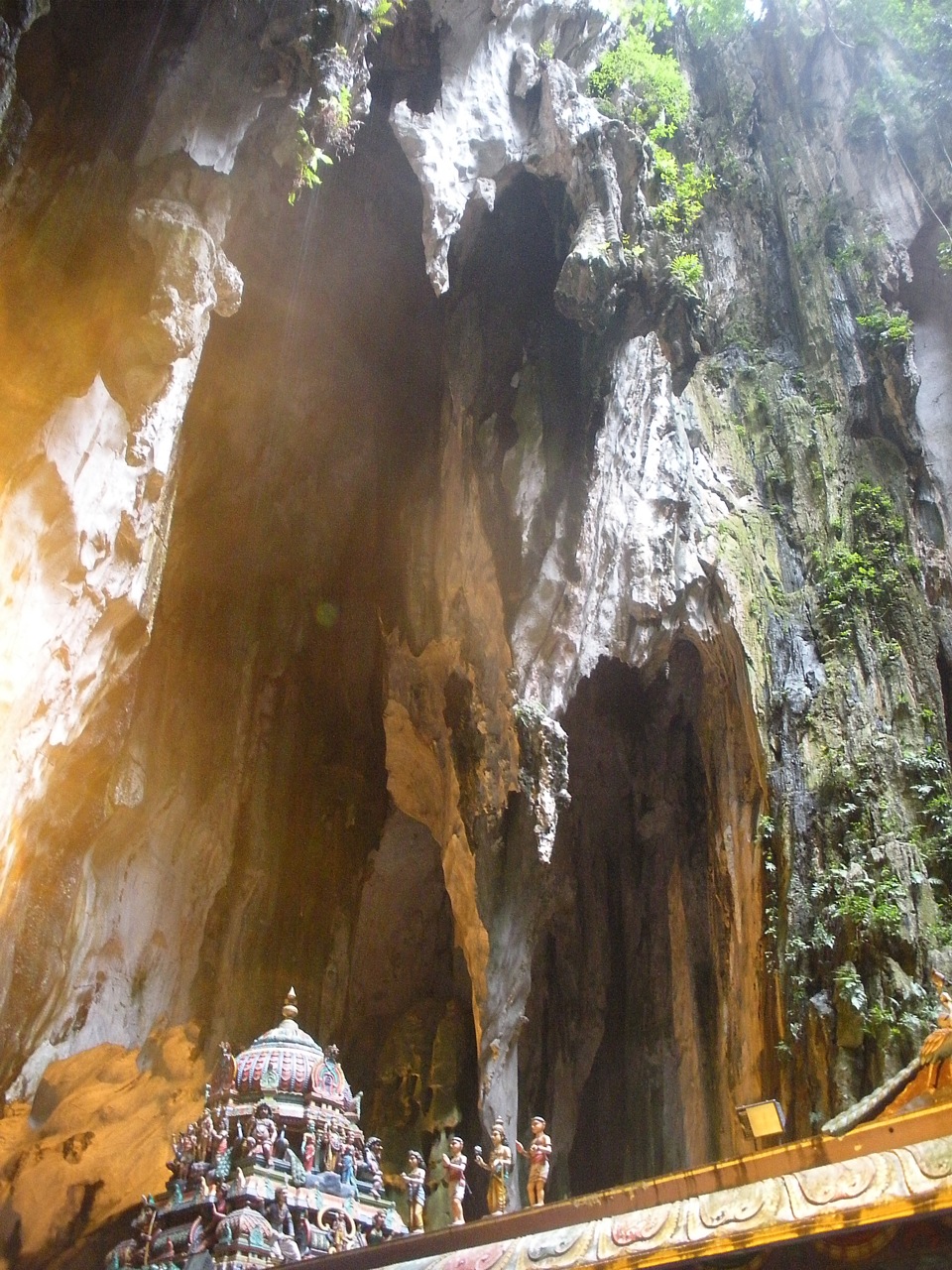
Craggy overhang
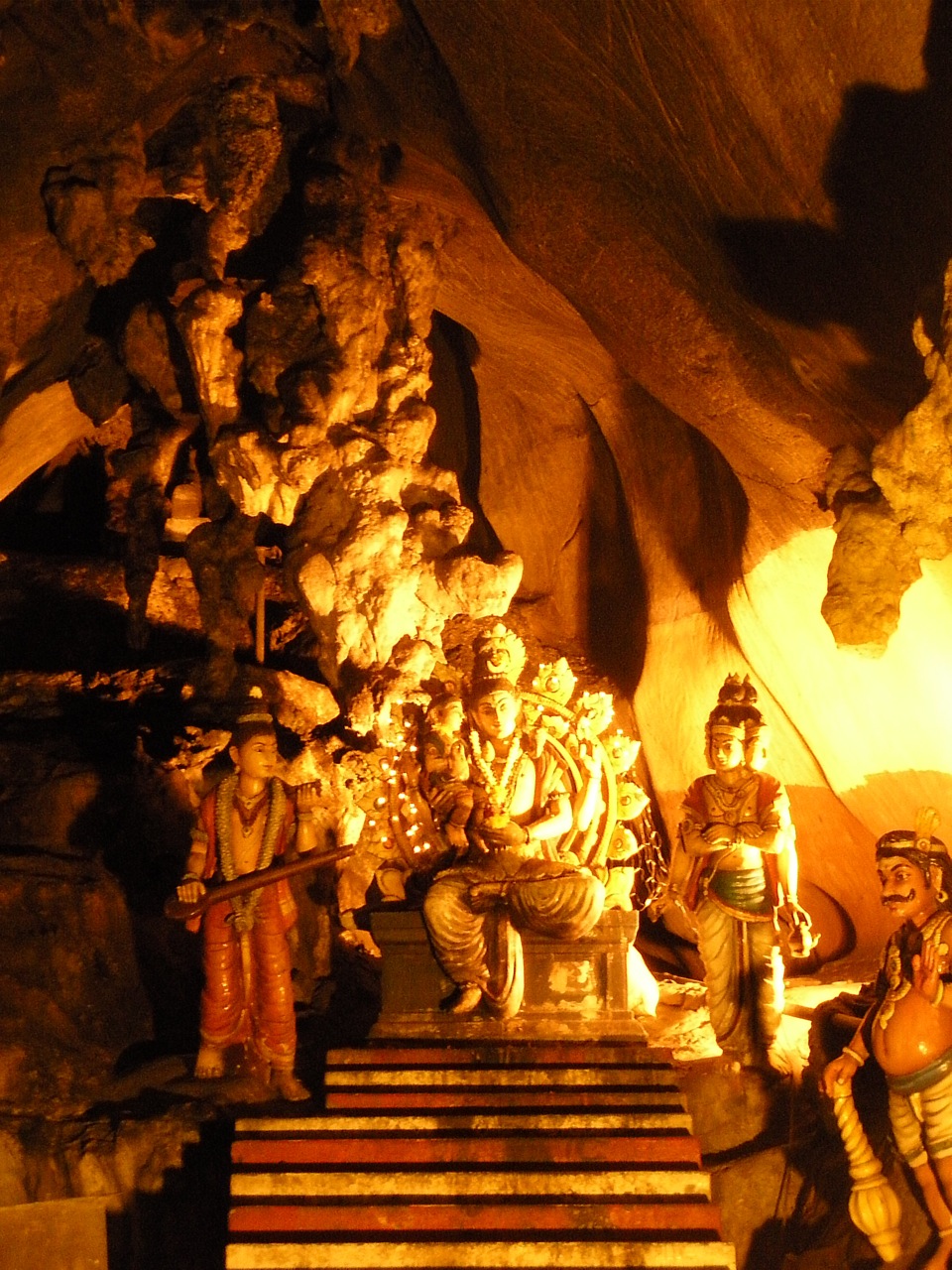
Shrine in the caves
The trip back down the stairs was interesting. Hard for me, because you know how fond of heights I am, and the monkeys were a bit more active. We were getting closer to a mama monkey with her baby clinging to her chest, and while I was standing back on a landing trying to get a photo of her sitting on the railing, a guy accidentally grabbed her as he was reaching for the handrail. She wasn’t pleased, and made a beeline for Grant and me, since we were standing between her and the edge of the stairs closest to the trees. We awkwardly danced around her, and made our way carefully down the rest of the steps.
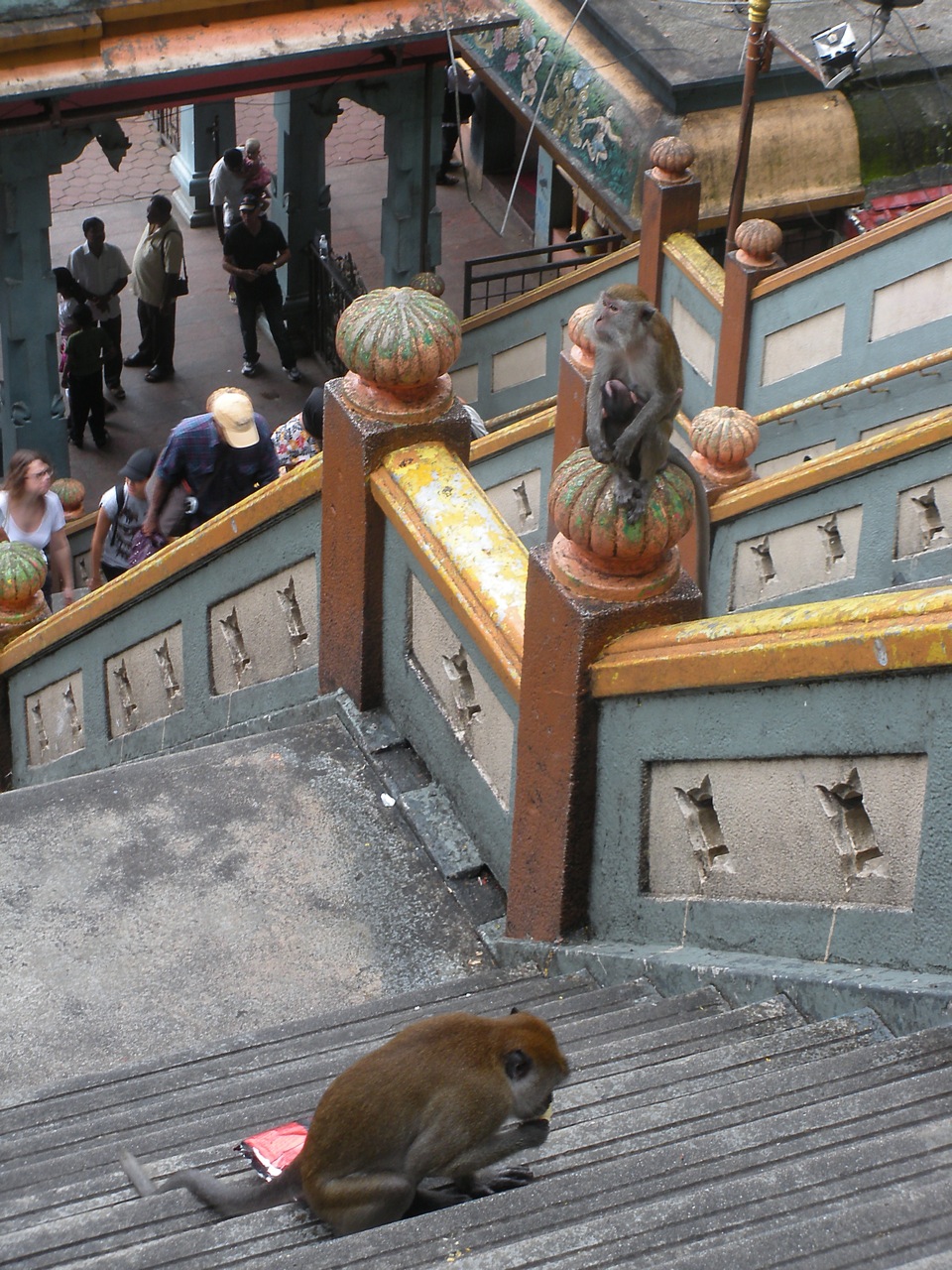
Up close and personal
Ok everyone, 272 steps and more monkeys than you can count. What do you think the greatest hazard is going to be? Wait for it….
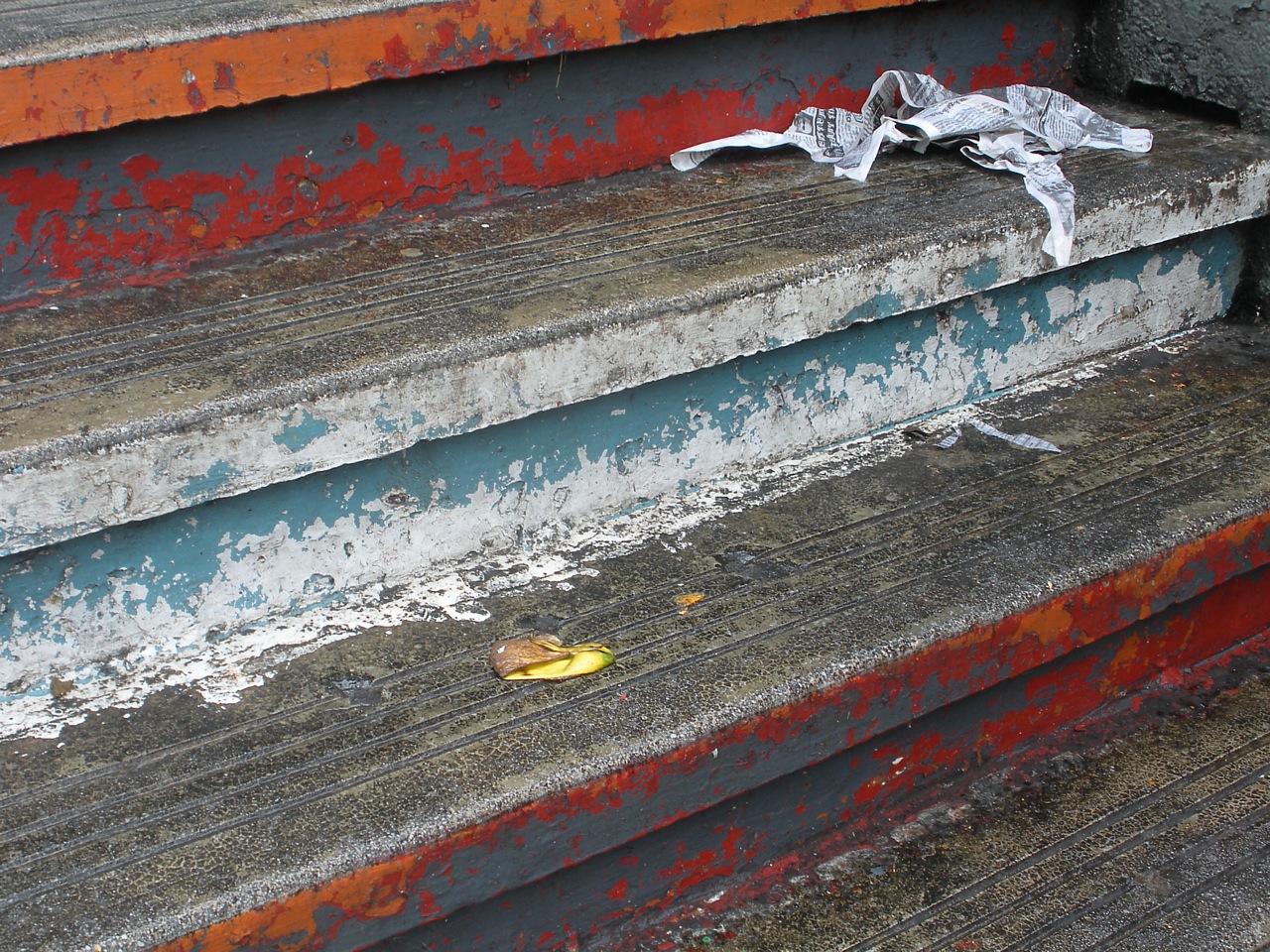
Banana peels!
Some (crazy) people like to feed the monkeys here. We were walking around the base of the caves area, and you’d see the trees gently twitching as monkey acrobatics were taking place. All it took was one guy with a piece of fruit, and suddenly the monkeys started swarming down off the hillside. They are a little aggressive, and certainly have no fear of people. Of course, it’s quite the high life for them: plenty of free food, trees and buildings to climb, and a constant stream of tourists here to worship…them? I can see how it would go to their heads.
The taxi ride home was a new experience for us too, when our driver announced that he needed to gas up or else we’d end up pushing the car back to KL. He checked the meter with us before we stopped, and said we’d just check it again before we continued and subtract the cost of the stop – pretty reasonable. Then he pulled up to the pump, left the car running and opened the hood. We figured he was going to check something out, but then he proceeded to put a large hose into the engine compartment and we heard a loud hissing noise as he filled the tank (from the sounds of it, located in the trunk) with compressed natural gas. That was a first, although it looks pretty common for taxis here. Our driver was complaining about the lack of pressure, and I would have thought that Grant would have a million questions, but it left him speechless!
Wild about the zoo
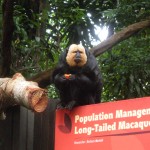
The first thing you notice, after dodging the official photographers, hundreds of kids, and the possibility of being completely sidetracked into the gift shop, is that there are monkeys. Yup, monkeys. Sitting in the tree above your head, jumping from branch to branch. Running along the top of the signboard that I couldn’t tell you what it says, because who reads a sign where there is a monkey sitting on it? Eating oranges, as apparently they do (I would have expected bananas, but whatever).
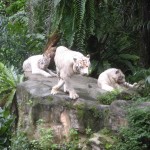
Singapore Zoo is a wild place to be. Its meandering footpaths allow you to happen upon the animals in their “enclosures”, which often appear more open than enclosed. Next to the tiger area was a painted line showing the range of a tiger’s leap. The dueling visuals of this factual representation and the big tiger pacing and staring menacingly at us was a little unsettling. I was almost convinced he could have leapt the moat and eaten us all, and that he wanted to.
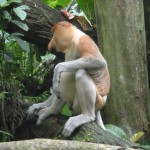
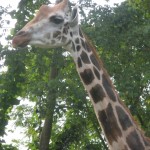
Clearly, I loved the monkeys and their various relations: orang-utans (fun fact: means man of the forest in Malay) from Borneo and Sumatra, proboscis monkeys, gibbons, capuchin monkeys, mandrills, spider monkeys, baboons and many more. Grant enjoyed the snake house, with its display of local poisonous snakes. There were more of those than I really needed to see. You seem so close to the animals that it feels like they are really interacting with you. It was fun watching the cheetah watch Grant as if he was dinner, and the giraffes gave us a stately nod.
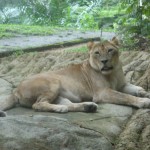
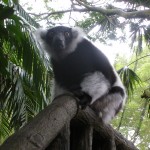
After the zoo, we walked over to the Night Safari. This is really a one of a kind experience; it feels like you’ve been let loose in the zoo after dark. Then, as it gets darker, it feels as if the animals have gotten loose in the zoo after dark! Every noise had me jumping a mile in the air, convinced that the glass between me and the leopards had disappeared, or that the lions weren’t just across the road anymore. The most relaxing way to enjoy this experience is to take the 40 minute tram ride that takes you past most of the animals, with a very informative guide.
You also have the option of walking a couple of trails, and that was when it really got spooky. Well, cheesy at first, as you walk through the bar called the Z-Bar with its zebra theme, and then spooky as you walk down pitch-black paths up to big cat viewing areas, and into giant flying squirrel and bat enclosures. I thought I would hate the bat enclosure, but a docent offered to walk us through and really made the experience more interesting than scary. We got very close to the largest bats in the world, the flying fox, aka fruit bat, and watched the lesser dog-faced fruit bats digging into their bananas very happily. The docent was telling us that it was good there was so much fruit available that night, so they weren’t fighting over it. I was pretty happy about that too.
Definitely a must-see for a trip to Singapore, and a great way to spend our last full day there!
Recent Comments